
Finding what's hidden
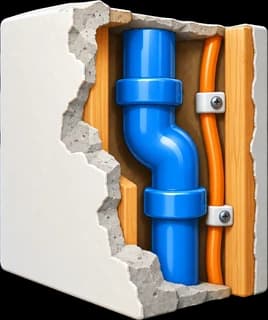
Before you drill a wall or break open a floor, it's better to know what is inside. We pick the instrument to fit the job: a detector finds cables and pipes inside a wall, a pipe listening device picks up the noise of a water leak, a cable locator traces buried cables and metal pipes, and a thermal camera shows soaked insulation on a roof. That way the repair stays in one spot instead of the whole room.
Services
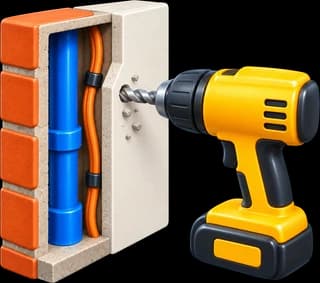
Finding wiring and pipes in walls
We'll show you where the wires and pipes run inside a wall, before you pick up the drill.Learn more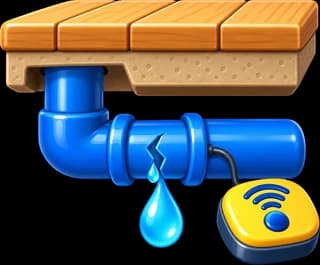
Water leak detection
We'll find where the pipe is leaking without opening up floors and walls.Learn more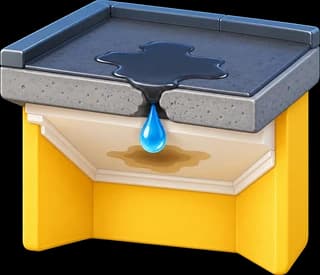
Flat roof leak detection
It drips in one place while the water gets in somewhere else entirely. We find the real leak.Learn more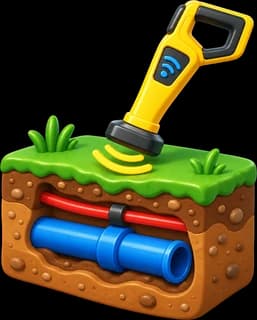
Underground utility locating
Before any digging starts, we show where the cables and metal pipes run underground.Learn more
Example tasks
Click an example to start a request with that description.
What to tell us for a preliminary estimate
- What we're looking for and in which room
- When the stain, puddle or damp smell appeared
- What you have already tried
- Address and a convenient time
How the work goes
Tell us about the task
Choose a category or describe the problem in your own words. You can add photos, an address and a preferred time frame.
We clarify the details
An operator will contact you, ask the necessary questions and define the scope of work.
We agree on a solution
Before any work starts, you receive the proposed approach, the timeline and the cost.
We organise the work
We assign a suitable specialist or crew and keep track of the status.
You check the result
The work is considered complete once the customer has checked and confirmed it.
What affects the cost and timeline
- The area to be searched
- What we look for: a pipe, a cable, a leak or a buried route
- Floor, wall, roof or plot of land
- Distance from Yerevan
The exact cost and timeline are agreed before work begins — once the details are clarified.
Frequently asked questions
Will you pinpoint the exact spot?
We'll show the area and mark it. How precise that is depends on the job and on what is inside: a live cable and a metal pipe the detector finds reliably, a plastic pipe with no water far less so. If we can't find it, we'll say so honestly.
Do you look for a pipe in a wall with a thermal camera?
Not only. The main instrument here is a detector: it senses metal and live cables. The thermal camera helps when the pipe is warm, so we sometimes ask you to run hot water or turn the heating on for a while.
And how do you find a water leak?
A leak can be heard: water makes a noise where it escapes, and a pipe listening device picks that up straight through the floor or the wall. The thermal camera then narrows the search down by the damp and cooled-down areas.
Ready to describe your task?
Submitting the form does not confirm the cost or the completion date.